


Introduction
In 2025, the number of connected devices will no longer be measured in millions. Industry reports show there are over 16 to 18 billion IoT devices active worldwide, with forecasts pushing that toward 40 billion by 2030.
Yet despite this growth, many product teams still face the same hard question: which connection should my device use? Choosing wrong can drain batteries too quickly, drive up monthly costs, or leave a smart home gadget constantly dropping offline.
IoT device connectivity is not a one-size decision. Wearables connectivity often means pairing to a phone and saving every milliamp-hour. Smart home devices’ connectivity demands stable coverage across a house, even through walls. Consumer electronics connectivity might need gigabit speeds for video. And cellular IoT connectivity can reach remote meters, but costs more per unit. Each comes with trade-offs in range, latency, scalability, and energy use.
In the sections below, you will see the data on each IoT connectivity option, the cost ranges, and where each works best. Some companies even choose to work with IoT-focused MVNO platforms early in the design phase to avoid future connectivity bottlenecks.
What Would You Get by the End of the Article?
- Understand the core technical and business factors that define IoT device connectivity in 2026.
- See how real-world performance, coverage, and cost vary across popular IoT connectivity options.
- Learn which connections fit wearables connectivity, smart home devices connectivity, and industrial sensors.
- See how consumer electronics connectivity needs differ from low power IoT connectivity needs.
- Be ready to match cellular IoT connectivity or other options to your own product category with confidence.
The Four Pillars of IoT Device Connectivity Decisions
Every engineer or product manager evaluating IoT connectivity options ends up asking the same four questions.
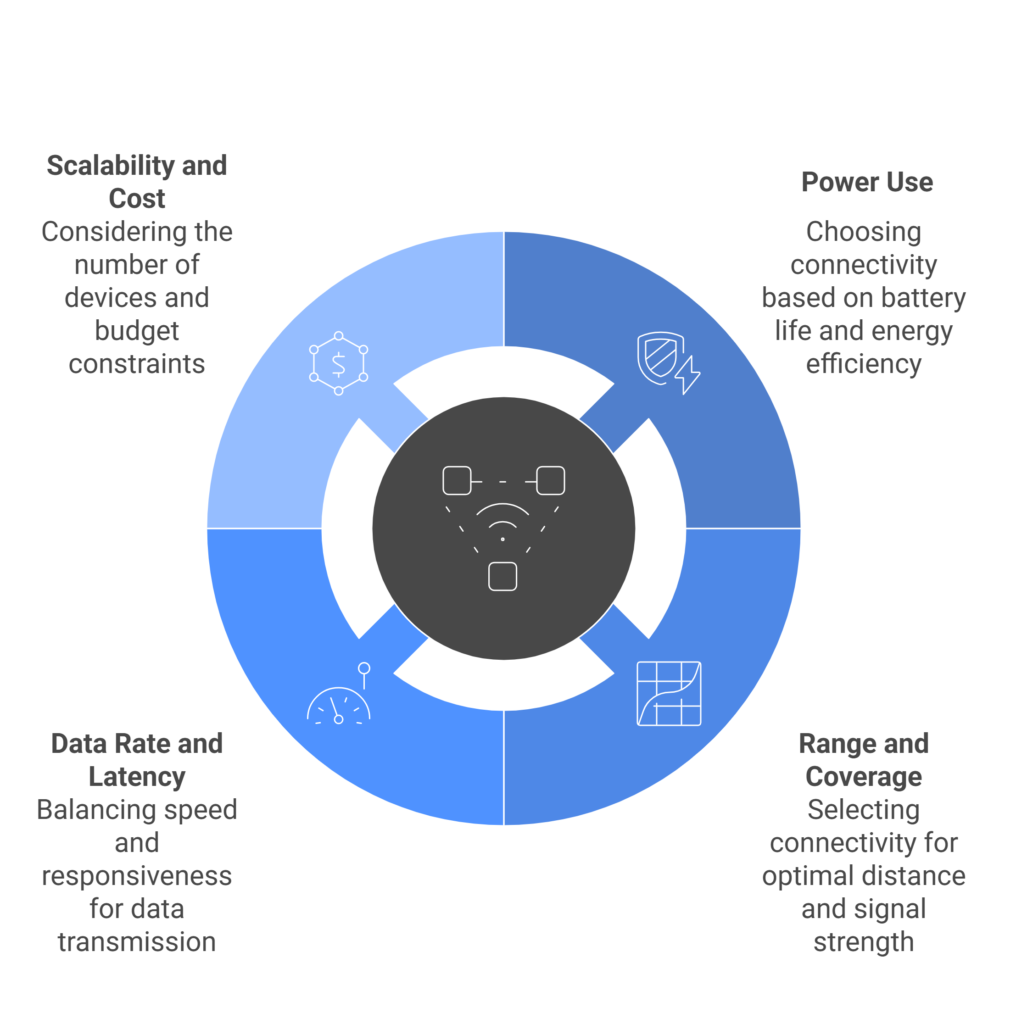
1. Power Use
Battery life is often the first limiter. A smartwatch that lasts one day on a charge will lose out to one that lasts a week. Low power IoT connectivity standards like Bluetooth Low Energy or LoRaWAN are built for devices that sleep most of the time.
Cellular IoT connectivity like NB-IoT or LTE-M also has deep sleep modes, but higher peak draw when transmitting. Wi-Fi or 5G give huge bandwidth, yet they drain power quickly, making them better for plugged-in consumer electronics connectivity.
2. Range and Coverage
Wearables connectivity usually needs only a few meters to a paired phone. Smart home devices’ connectivity has to cover an entire building. Cellular IoT connectivity or LoRaWAN can stretch coverage for kilometers, perfect for agriculture sensors or city infrastructure.
Stats show LoRaWAN reaching 15 km in rural and 2–5 km in urban areas, while NB-IoT penetrates deep indoors to basement utility meters. For IoT products expanding globally, integrating eSIM capabilities can ensure consistent coverage across regions without redesigning hardware.
3. Data Rate and Latency
If your IoT device connectivity needs to push live HD video, Wi-Fi or 5G are the clear choices, both can hit hundreds of Mbps in real deployments. Zigbee or LoRaWAN can cap at kbps levels, which is fine for small sensor packets. Latency matters for control applications: Bluetooth and Wi-Fi respond in milliseconds, NB-IoT can take seconds.
4. Scalability and Cost
A smart lighting network may have hundreds of Zigbee bulbs in a mesh. A city’s smart meters may run into hundreds of thousands of NB-IoT modules, each on a low-cost subscription. LoRaWAN can connect thousands of devices to one gateway without per-unit fees if you run your own network.
Hardware costs also vary: LoRaWAN modules average $8–10, NB-IoT modules $10–15, Wi-Fi chips just a few dollars thanks to consumer electronics scale. For businesses running mixed networks, integrated connectivity management can keep costs transparent across all device types.
How to Choose IoT Connectivity for a New Device
The right IoT connectivity depends on five core requirements: power consumption, coverage, mobility, data volume, and deployment economics. Choose low-power technologies such as BLE, LoRaWAN, or NB-IoT for small, infrequent data transmissions; LTE-M or Cat-1bis when mobility and cellular coverage matter; 5G or RedCap for higher-performance applications; and NTN when terrestrial coverage is unavailable or unreliable.
Before selecting a technology, define the device’s expected battery life, geographic footprint, mobility, data volume, latency requirements, network availability, module cost, connectivity cost, and expected deployment lifetime. Also evaluate whether the device may need to change carriers or networks after deployment. For products expected to operate globally or for many years, eSIM and remote connectivity management can reduce the operational impact of future network or commercial changes.
Comparing Popular IoT Connectivity Options in 2026
Here’s a quick technical table comparing the major choices for IoT device connectivity:
| Technology | Range | Data Rate | Power Use | Latency | Scalability | Example Use Cases |
|---|---|---|---|---|---|---|
| Wi-Fi | ~50 m indoors | Up to 1 Gbps | High | <100 ms | Dozens–hundreds | Smart TVs, cameras |
| Bluetooth LE | 10–100 m | ~1–2 Mbps | Very low | 10–50 ms | 8–128 devices | Wearables, sensors |
| Zigbee | 10–100 m per hop (mesh) | 250 kbps | Very low | ~100 ms | 65,000 nodes mesh | Smart lighting |
| LoRaWAN | 2–5 km urban, 15 km rural | 0.3–50 kbps | Extremely low | Seconds | Thousands/gateway | Agriculture, meters |
| NB-IoT | 1–10 km, deep indoor | 20–250 kbps | Low | 1–10 s | 100,000 devices/cell | Utilities, cities |
| 5G | 1–3 km (sub-6 GHz) | Up to 10 Gbps | High | 1–10 ms | 1M devices/km² | Video, robotics |
These numbers are based on industry research and global IoT adoption studies. For developers, considering how standards like SGP.32 affect multi-network compatibility is increasingly important.
Wi-Fi in IoT Device Connectivity
Wi-Fi is still one of the most used IoT connectivity options. Around 31% of all IoT connections are on Wi-Fi, especially in consumer electronics connectivity like smart speakers, TVs, and cameras. Its biggest strengths are speed and availability, most homes already have it.
But engineers know the trade-offs. High peak power draw makes Wi-Fi a poor fit for low power IoT connectivity. Range is limited to the building footprint. Scalability depends on router capacity and interference from neighbors. It works best where mains power is available, and data needs are high. Many design teams plan Wi-Fi devices alongside multi-carrier connectivity plans to keep future network upgrades simple.
Bluetooth Low Energy for Wearables Connectivity
Bluetooth LE has become the default for wearable connectivity. Fitness trackers, smart watches, and health sensors use it to send data to smartphones without draining the battery. BLE modules sip power and can last months or years on coin cells.
Its range of 10–100 meters fits personal use. BLE mesh can extend that for smart home devices connectivity, though with more latency. Data rates are enough for heart rate or step counts, but not for streaming video.
For product managers, BLE is also attractive because every phone is already a gateway. That removes the need for costly infrastructure in many consumer electronics connectivity products.
Zigbee for Smart Home Devices Connectivity
Zigbee’s mesh networking makes it a favorite in smart home devices connectivity. One plugged-in Zigbee bulb can pass messages from a sensor in a distant room back to a hub. Networks can scale to tens of thousands of nodes, though most homes use dozens.
Power use is very low. A door sensor can run for years without a battery change. Data rates are small but enough for automation commands. Many large brands in home automation use Zigbee profiles, and newer standards like Matter build on similar tech.
LoRaWAN for Low Power IoT Connectivity at Long Range
When you need low power IoT connectivity over kilometers, LoRaWAN stands out. Rural trials show 15+ km range, urban deployments average 2–5 km. Battery life can exceed five years for devices sending only a few packets a day.
It is ideal for agriculture, environmental monitoring, and municipal sensors. LoRaWAN works in unlicensed spectrum, so you can build private networks and avoid monthly fees. Hardware costs are moderate. The trade-off is very low data rates and higher latency, fine for status updates, not live control.
NB-IoT in Cellular IoT Connectivity
NB-IoT is part of the cellular IoT connectivity family. Operators deploy it on licensed spectrum, often alongside LTE. It reaches deep indoors, making it popular for utility metering. Coverage can span entire cities using existing towers.
Module costs are dropping toward $10, and annual connectivity plans can be as low as a few dollars per device. Data rates of up to 250 kbps handle meter readings and firmware updates. Latency is higher than LTE, so it is not used for fast control loops.
5G for High-Bandwidth Consumer Electronics Connectivity
5G can deliver gigabit speeds with millisecond latency in ideal conditions. For consumer electronics connectivity like security cameras or AR headsets, that means wireless freedom without losing performance.
However, 5G radios consume more power, and module costs remain high. It is best for devices with large batteries or constant power. For IoT device connectivity in robotics, industrial automation, or connected vehicles, 5G opens capabilities that no other wireless option matches today.
2026 Cellular IoT Options: LTE-M, Cat-1bis, RedCap and NTN
Modern cellular IoT deployments have more options than NB-IoT and full 5G:
- LTE-M: Suitable for mobile, battery-powered IoT devices that need more throughput and mobility than NB-IoT.
- Cat-1bis: A practical cellular option for devices requiring moderate data rates, broad LTE availability, and simpler hardware than higher-end 5G solutions.
- 5G RedCap: Designed for mid-tier 5G IoT applications that need more performance than LPWAN technologies without the full complexity of high-end 5G.
- NTN: Extends cellular IoT connectivity through non-terrestrial networks for remote locations where terrestrial cellular coverage is limited.
These technologies can complement rather than replace the connectivity options already discussed in this guide.
How Spenza Simplifies and Optimizes Your Choice
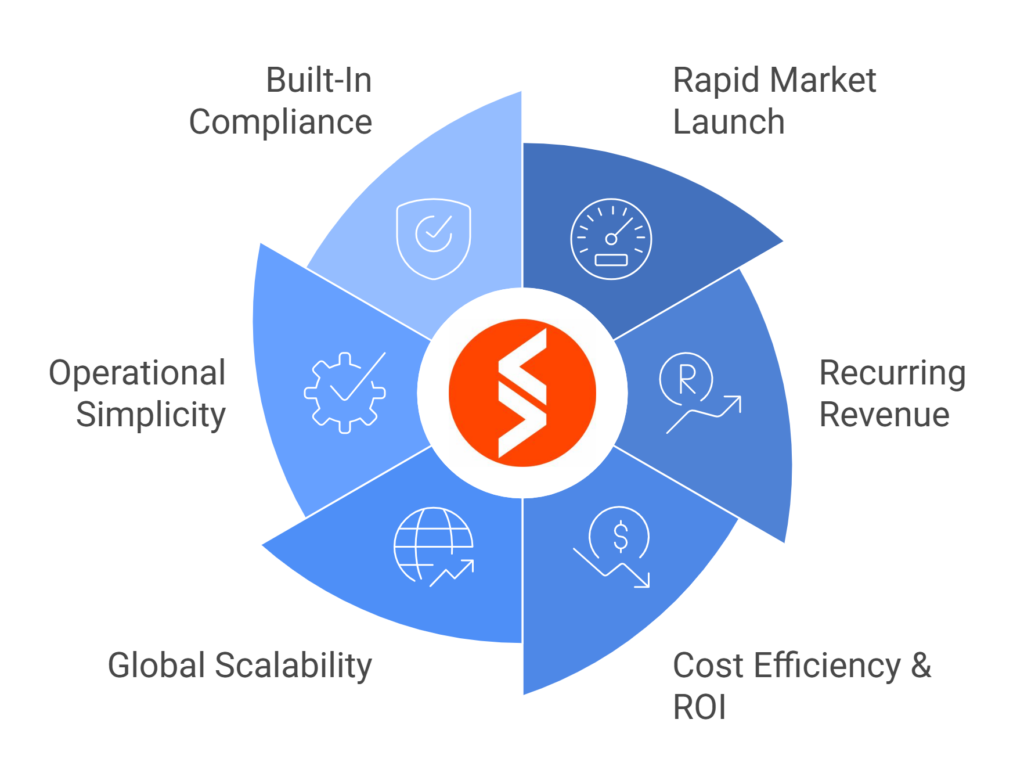
When teams finalize their IoT device connectivity plan, they often juggle multiple vendors, contracts, and technical specs. They also wrestle with testing different IoT connectivity options across wearables connectivity, smart home devices connectivity, and other categories. This is where the right partner changes the equation.
Spenza is not tied to a single network or protocol. Instead, it operates as a modern MVNE built for both traditional MVNOs and IoT-focused deployments. That means you can run Wi-Fi-powered consumer electronics connectivity in one product, low power IoT connectivity like NB-IoT in another, and cellular IoT connectivity in a third, all managed under one umbrella.
Spenza, for example, supports multiple technologies from one platform and can integrate connectivity management into your product plan from day one.
IoT Connectivity Management Across Multiple Technologies
For manufacturers with multiple products, the connectivity decision does not end when the radio technology is selected. A centralized connectivity management layer can provide a common operational view across cellular and other connectivity types, helping teams manage provisioning, usage, SIM/eSIM lifecycle, connectivity costs, and device-scale operations from one environment.
This becomes particularly valuable when one product portfolio uses different connectivity technologies for different device categories, markets, or performance requirements.
A Portfolio of Options on One Platform
Without a unifying platform, a manufacturer might have:
- A Wi-Fi chip vendor for consumer electronics connectivity.
- A Bluetooth stack vendor for wearables connectivity.
- A carrier contract for cellular IoT connectivity.
- A LoRaWAN network partner for long-range low power IoT connectivity.
Each comes with its own dashboard, billing cycle, and integration headaches. Spenza solves that by giving you a single cloud-native, API-first platform that connects to all of them.
From high-speed 5G for industrial robotics to NB-IoT for smart meters, every active SIM, eSIM, or embedded radio appears in one console. That same console connects to usage analytics, alerts you to anomalies, and helps you scale without changing your operational workflow. If your product range spans smart home devices connectivity and citywide LPWAN projects, the same platform handles both.
For development teams, this also means you can integrate the platform APIs directly into your firmware provisioning and device management flows. That reduces manual setup, especially when onboarding thousands of units at once.
Future-Proof with eSIM
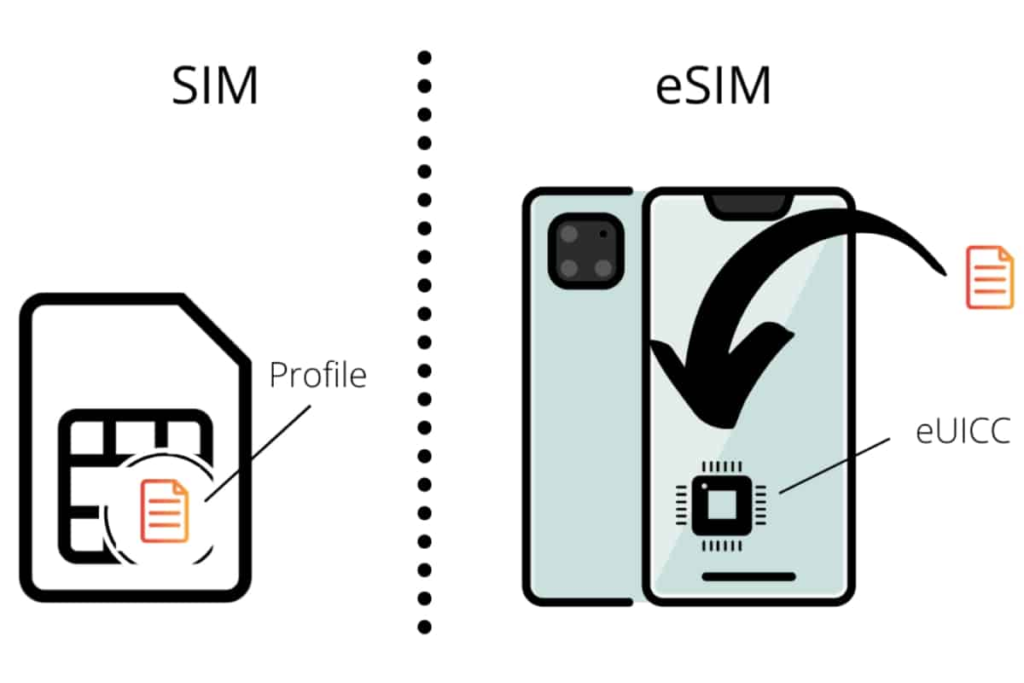
Hardware lock-in used to be a big risk in IoT device connectivity. If you designed your product for one carrier’s SIM profile, switching later meant replacing SIMs in the field, a nightmare for distributed fleets.
Spenza removes that risk with full eSIM support, including the latest standards like SGP.32. With eSIM, you can remotely change a device’s network profile without physically touching it. That means a wearable fitness tracker sold in the US can be shipped to Europe and activated on a local carrier instantly.
This flexibility is especially powerful for cellular IoT connectivity in global deployments. You can launch a product line without worrying about roaming agreements or mismatched coverage. And if a better commercial rate becomes available, you can push the new profile over the air.
For IoT products in low power IoT connectivity categories like NB-IoT or LTE-M, eSIM also ensures you can pivot between carriers offering the strongest local signal, which is critical when devices are in hard-to-reach locations like basements or remote farms.
Operational Efficiency and Cost Control
IoT device connectivity budgets get out of control when teams track usage manually or across too many vendor portals. Spenza’s platform offers integrated connectivity management that ties SIM provisioning, activation, and billing together.
This is not just about avoiding overage fees. It’s about seeing, for each device type, whether it’s wearables connectivity, consumer electronics connectivity, or smart home devices connectivity, exactly how much data it consumes and whether it’s using the right IoT connectivity option.
By spotting anomalies quickly, teams can shut down misconfigured units before they rack up charges. And with a single invoice for all connectivity types, finance teams can forecast costs accurately without reconciling data from four or five different providers.
Example: Multi-Product Manufacturer
Consider a manufacturer that builds:
- A BLE + LTE-M connected smartwatch.
- A Zigbee-based smart lighting system.
- An NB-IoT smart water meter.
Traditionally, that’s three separate vendors, integrations, and contracts. With Spenza:
- All three fall under one management portal.
- Each device type’s lifecycle, from provisioning to retirement, follows the same process.
- eSIM lets the smartwatch ship globally without SKU changes.
- NB-IoT and LTE-M SIMs can be swapped remotely if coverage changes.
This approach saves months of operational overhead and removes risk from scaling into new markets.
Conclusion: The Right Connection is Your Competitive Advantage
IoT device connectivity is a core design decision, not an afterthought. A battery sensor that lasts five years instead of one, a wearable that works across countries without extra SKUs, or a smart home hub that supports hundreds of devices without slowdown, all start with the right choice of IoT connectivity options.
For product teams, that choice touches wearables connectivity, smart home devices connectivity, consumer electronics connectivity, and cellular IoT connectivity differently. The wrong fit can mean more returns, higher support calls, and slower adoption. The right fit means better user experiences, predictable costs, and longer product lifespans.
Spenza gives you the tools and expertise to make that choice confidently, and to adjust it as markets, technologies, and networks evolve. From low power IoT connectivity for field sensors to multi-gigabit cellular IoT connectivity for video and robotics, it all runs under one API, one invoice, and one point of control.
FAQs
Building the next great consumer IoT device? Let’s ensure it has the perfect connection to succeed. Contact Spenza to discuss your product’s specific connectivity needs today.


