


Introduction: The Unstoppable Rise of Enterprise Mobility
As enterprises increasingly support remote work, BYOD programs, frontline employees, and IoT deployments, managing mobile devices and cellular connectivity separately creates operational inefficiencies, security gaps, and unnecessary telecom costs.
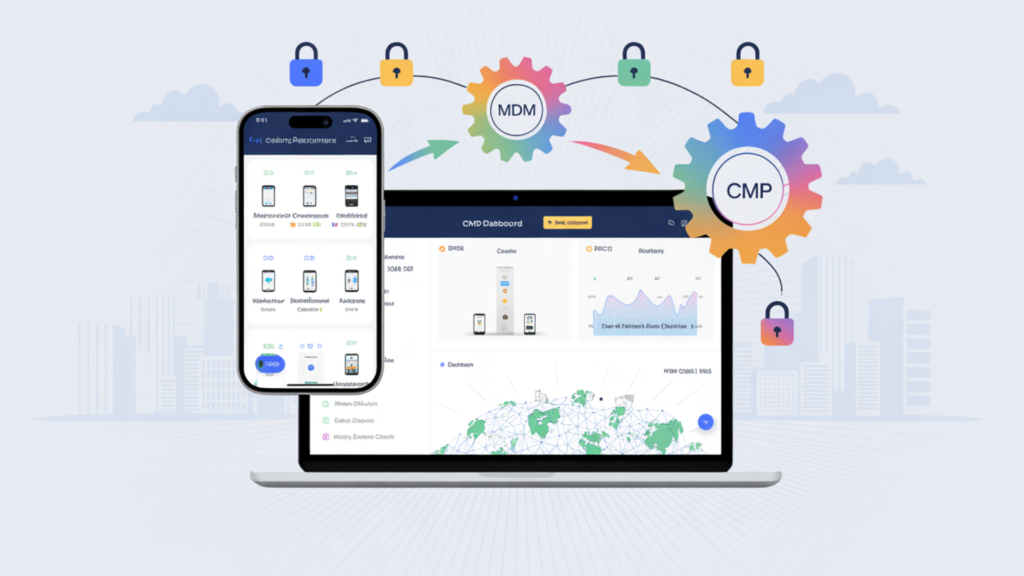
MDM CMP integration unifies device management with connectivity management, enabling IT teams to enforce security policies, automate SIM and eSIM lifecycle management, optimize mobile spend, and gain complete visibility across devices and networks from a single operational framework.
This guide explains how integrating Mobile Device Management (MDM) with Connectivity Management Platforms (CMP) improves enterprise mobility, strengthens security, simplifies operations, and prepares organizations for the future of Unified Endpoint Management (UEM).
What Is MDM CMP Integration?
MDM CMP integration connects Mobile Device Management (MDM) platforms with Connectivity Management Platforms (CMP) to manage both enterprise devices and their cellular connectivity through a coordinated workflow. By combining device security, SIM and eSIM lifecycle management, network policies, and telecom expense management, organizations gain centralized visibility, stronger security, and more efficient enterprise mobility operations.
The Modern Workforce: Mobile and Distributed
Enterprise mobility continues to accelerate as hybrid work becomes standard, with more than 2 billion people worldwide expected to work remotely at least part of the time. This shift has made secure mobile device and connectivity management a strategic priority for IT teams.
What is Enterprise Mobility Management (EMM)?
Enterprise Mobility Management (EMM) combines strategies to secure mobile devices, apps, and data. Two pillars make it work:
- MDM (Mobile Device Management): Controls devices (company-owned or BYOD), enforcing security, updates, and app policies.
- CMP (Connectivity Management): Manages data plans, SIMs/eSIMs, and network usage for cost-effective, reliable connectivity.
Why MDM + CMP Integration is Vital
- Security: Isolated tools leave gaps for cyber threats. Integration ensures devices and networks are protected.
- Cost Control: Avoid data overages and streamline billing with unified visibility.
- Efficiency: Automate device setup, data allocation, and troubleshooting.
- Future-Proofing: Supports IoT Analytics projects nearly 30 billion connected IoT devices worldwide by 2030, making unified management of endpoints and cellular connectivity increasingly important for enterprise IT operations.
MDM alone can’t optimize connectivity costs or handle eSIMs. Pairing it with a CMP creates a seamless, secure, and scalable mobility strategy. Stay tuned to learn how integrated solutions future-proof your business!
What is Mobile Device Management (MDM)
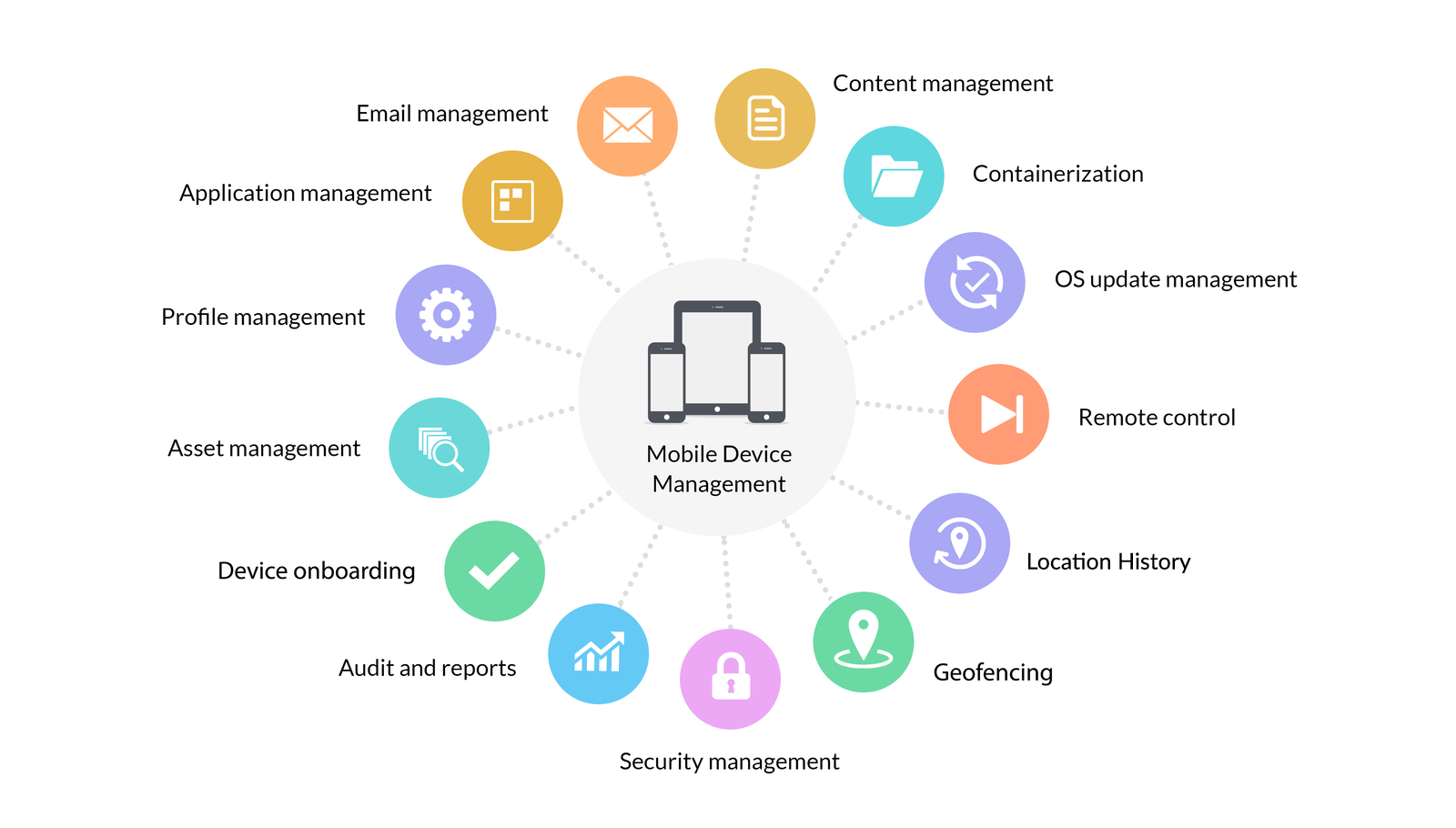
Mobile Device Management (MDM) is a software-based solution that allows organizations to manage, secure, and monitor mobile devices (like smartphones and tablets) used by their employees. It enables IT administrators to enforce policies, deploy applications, update software, and remotely manage devices, even when they are owned by the employee (BYOD).
Key Features and Benefits of MDM:
- Centralized Management: IT administrators can manage a large number of devices from a single platform, saving time and resources.
- Security Policy Enforcement: Enforces strong passwords, encrypts data, blocks risky features (like unauthorized app stores), and allows IT to remotely lock or wipe lost devices.
- Mobile Application Management (MAM): Controls work apps on devices—deploy work-approved apps, update them, and block unsafe ones. Some MDMs include a private ‘app store’ for easy access.
- Remote Management and Troubleshooting: IT can remotely update settings. IT administrators can remotely manage devices, such as installing updates, configuring settings and fixing issues (like app crashes), etc.
- Device Tracking and Inventory: Tracks device locations (via GPS), lists all hardware and software in use, and monitors for outdated apps or OS versions.
- Compliance Management: Ensures devices meet company rules and laws (like GDPR or HIPAA). MDM flags non-compliant devices and generates audit-ready reports.
- BYOD Support: MDM enables organizations to support Bring Your Own Device (BYOD) programs by allowing employees to use their personal devices for work while maintaining control over data security.
The Evolution of Device Management: From MDM to EMM and Unified Endpoint Management (UEM)
The landscape of mobile device management has evolved significantly.
- MDM: Focused primarily on securing and controlling the device itself.
- Enterprise Mobility Management (EMM): EMM expanded on MDM by integrating mobile application management (MAM), mobile content management (MCM), and mobile identity management (MIM). EMM provides a more holistic approach to managing the entire mobile ecosystem.
- Unified Endpoint Management (UEM): Unified Endpoint Management (UEM) is the latest advancement, unifying the management of all endpoint types – mobile devices, desktops, laptops, IoT devices, and wearables – from a single platform. UEM combines MDM and EMM functionalities with PC management capabilities.
What is Connectivity Management Platforms (CMP)
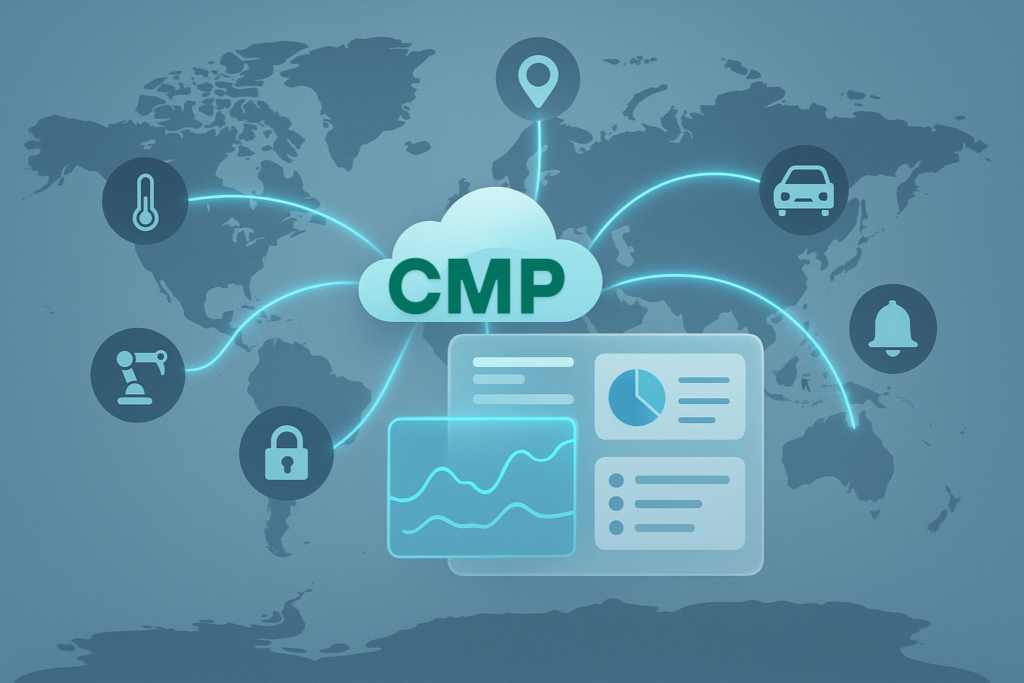
A Connectivity Management Platform (CMP) is a software solution that allows businesses to manage and control their IoT device connectivity. It provides a centralized interface for managing SIM cards, data plans, network performance, and costs associated with connected devices. Think of it as a dashboard for your IoT network, enabling you to monitor, troubleshoot, and optimize connectivity for your devices.
Key Features and Capabilities of a CMP:
- SIM Lifecycle Management: CMPs allow you to activate, deactivate, and manage SIM cards, including bulk operations.
- Data Plan Management: You can monitor data usage, optimize data plans, and ensure cost efficiency.
- Network Performance Monitoring: CMPs provide insights into network performance, allowing you to troubleshoot issues and optimize connectivity.
- Cost Control: By centralizing management and providing detailed usage reports, CMPs help you control and optimize your connectivity costs.
- Security: CMPs often include features for securing device communication and protecting sensitive data.
- Automation: Many CMPs offer automation capabilities, such as automatic SIM/eSIM provisioning and activation.
For businesses with global deployments or IoT devices, CMPs cut costs, eliminate connectivity gaps, and provide real-time control over cellular data usage. Paired with MDM, they create a bulletproof mobility strategy.
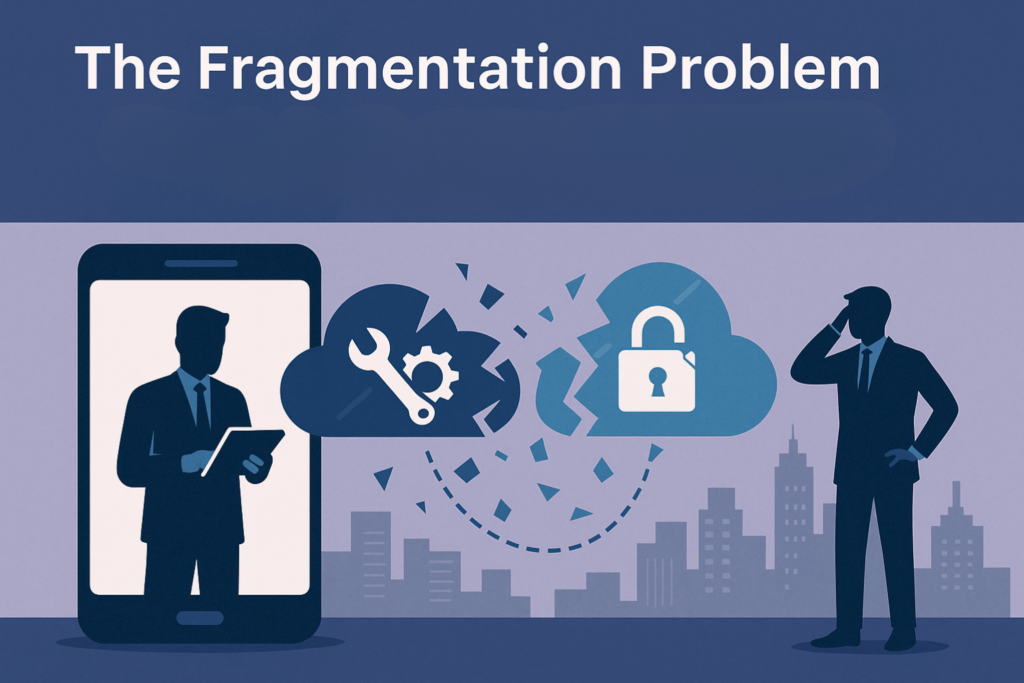
The Fragmentation Problem: Why Managing MDM and CMP in Silos Cripples Enterprise Mobility
1. Increased Operational Overhead and Administrative Burden
Managing MDM and CMP separately forces IT teams to toggle between platforms for basic tasks. For example, onboarding a device requires manual steps in MDM (app/config setup) and CMP (SIM activation, data plans). This duplication wastes time, increases errors, and drains IT resources.
2. Lack of Unified Visibility
Siloed systems mean IT can’t see the full story. MDM might report a device as “secure,” but hidden issues like poor network signal (visible only in CMP) could cripple productivity. Conversely, a CMP shows an active SIM, but MDM might flag the device as non-compliant or stolen.
3. Security Gaps and Vulnerabilities
- Example 1: A device secured by MDM could still access corporate data via an unmanaged cellular connection if the CMP isn’t synced.
- Example 2: A CMP detecting suspicious data spikes can’t trigger MDM to lock the device or wipe data—delaying threat response.
4. Disjointed Policy Enforcement
Policies like “block social media during work hours” require MDM (to restrict apps) and CMP (to limit network access). Without integration, enforcement is patchy—especially across BYOD or IoT devices with varying OS/network setups.
5. Challenges Amplified
- BYOD Risks: Personal devices (with mixed MDM/CMP compliance) create blind spots. A non-compliant phone could drain data budgets or expose networks.
- IoT Complexity: Managing thousands of sensors? Siloed tools struggle to align device security (MDM) with connectivity needs (CMP), like low-power networks.
6. Siloed Connectivity and MDM Complicates Cost Management Policies
- Wasted Costs: A device retired in MDM might still have an active SIM in CMP, racking up data fees.
- No Real-Time Control: Without integration, telecom expense management (TEM) is reactive, not proactive.
7. Over-Reliance on Device VPN Creates Performance and User Experience Issues
- Problem: MDM-enforced VPNs route all traffic (even personal streaming) through corporate servers, slowing speeds and inflating costs.
- Solution: Integrated CMP can prioritize business-critical traffic only, boosting performance and cutting data waste.
Key Takeaway
Siloed MDM and CMP = security blind spots, wasted budgets, and frustrated IT teams. Integration closes gaps, automates workflows, and unifies device + connectivity management.
The Power of One: Unlocking Synergistic Benefits with MDM and CMP Integration
Integrating MDM and CMP transforms fragmented tools into a unified force, boosting security, cutting costs, and simplifying operations. Here’s how:
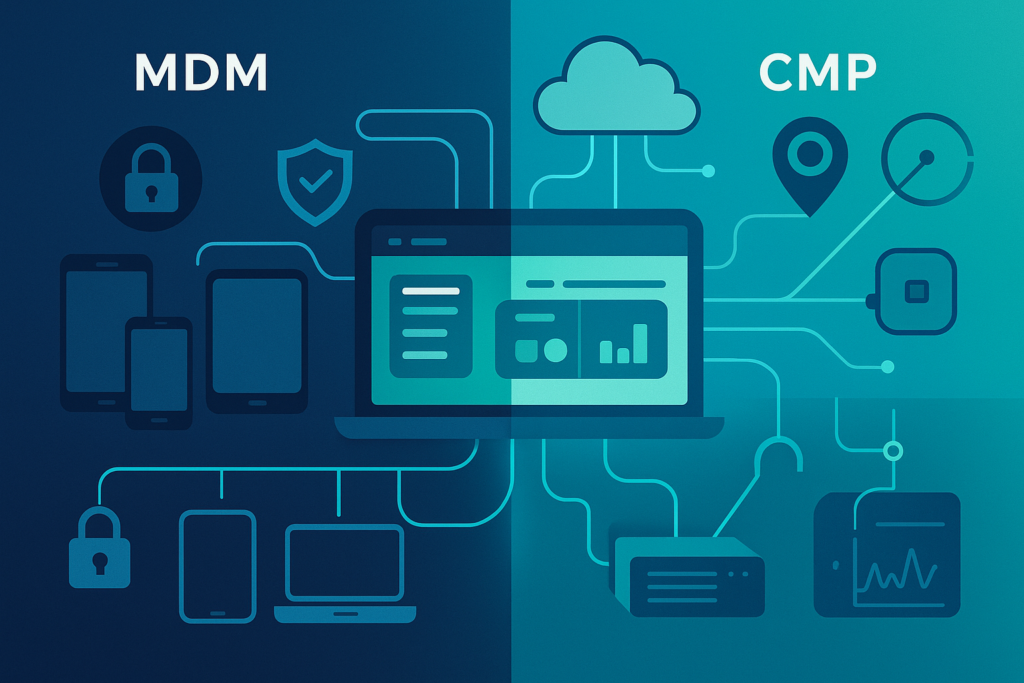
1. Enhanced Endpoint Security
- Consistent Policy Enforcement: Block non-compliant devices (flagged by MDM) from accessing networks via CMP. Example: A stolen phone is locked and disconnected instantly.
- Real-Time Threat Detection: MDM detects suspicious device activity → CMP checks network for anomalies. Immediate action prevents breaches.
- Faster Incident Response: MDM + CMP data pinpoints root causes. Isolate compromised devices in seconds.
2. Streamlined Operations and Optimized Cost Management
- Automated Onboarding: New device enrolled in MDM? CMP auto-activates its SIM/eSIM and data plan—zero manual steps.
- Centralized Control: Manage device policies and network settings from one dashboard. No more app-switching for IT.
- Lifecycle Automation: Retire a device in MDM → CMP auto-suspends its SIM/eSIM. No wasted costs or security gaps.
- Track Costs Per Device: See exactly which devices/users drain data budgets. Optimize plans or flag misuse.
- Real-Time Dashboard: View device health (MDM) + connectivity status (CMP) in one place. Spot issues faster.
- Smarter Network Policies and Granular Control : You can control who gets access and what they can do, making sure everything runs smoothly and securely.
3. Improved Regulatory Compliance
- Uniform Security: Apply GDPR/HIPAA rules to all devices and networks—no gaps.
- Audit-Ready Reports: Generate compliance proofs combining MDM (device logs) + CMP (network activity).
MDM + CMP integration = stronger security, lower costs, and effortless compliance. It’s the backbone of future-ready enterprise mobility.
Comparative Analysis: Standalone vs. Integrated MDM and CMP
| Feature/Benefit | Standalone MDM | Standalone CMP | Integrated MDM & CMP |
|---|---|---|---|
| Security | Device-level security policies | Connectivity management security features | Unified policy enforcement, real-time threat detection across layers |
| Operations | Device provisioning, app management, etc. | SIM lifecycle management, network control | Simplified onboarding, automated provisioning, centralized workflows |
| Visibility & Control | Device status, location, compliance | SIM status, network usage, connectivity | Comprehensive view of device, connectivity, and security status |
| Cost Management | Limited visibility into connectivity costs | Focus on connectivity cost control | Holistic view of device and connectivity costs, optimized data plans, resource allocation |
| Policy Enforcement | Device-centric policies | Connectivity-centric policies | Consistent policy enforcement across both device and connectivity layers |
| Incident Response | Device-level incident management | Connectivity-level issue resolution | Correlated incident response across device and connectivity layers, faster containment |
| BYOD Management | Securing corporate data on personal devices | Managing connectivity for personal devices | Unified approach to securing device and managing connectivity for BYOD environments |
| Compliance | Device compliance reporting | Connectivity usage and billing reports | Comprehensive reporting covering both device management and connectivity events |
Beyond Basic MDM: Real-World Use Cases of MDM + CMP Integration
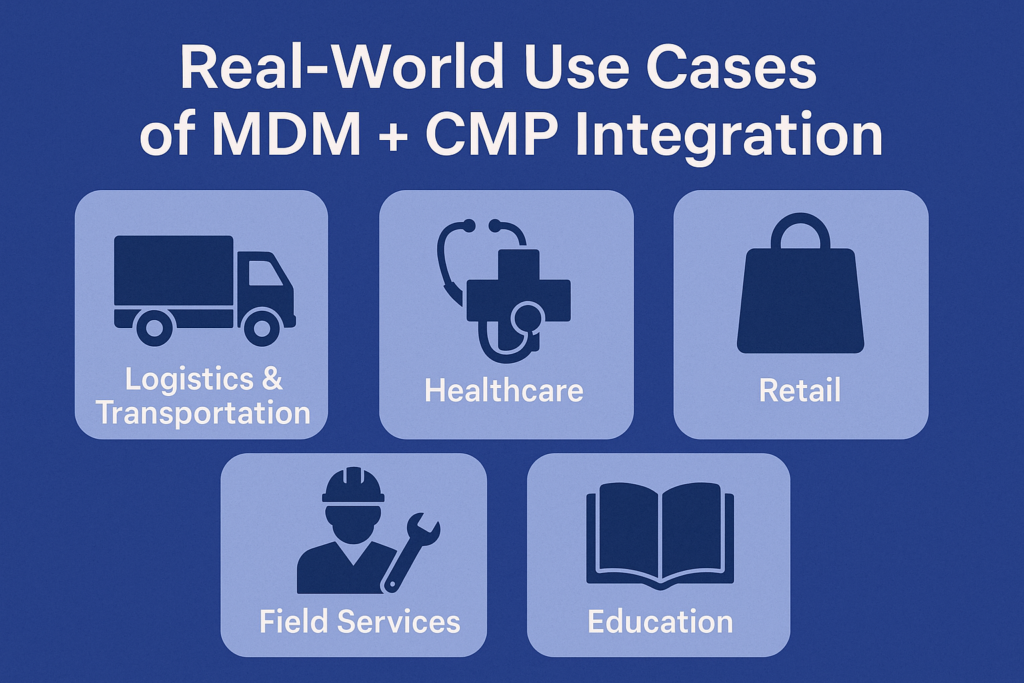
Logistics & Transportation
Track shipments securely with rugged devices. MDM locks apps to essentials (GPS/dispatch tools), while CMP ensures seamless connectivity in remote areas and controls data costs.
Healthcare
HIPAA-compliant tablets access EHRs securely. MDM encrypts devices; CMP guarantees connectivity. Lost device? MDM wipes data + CMP cuts network access instantly.
Retail
Secure mobile POS systems: MDM protects payment apps, CMP ensures stable transaction connectivity—even in pop-up stores.
Field Services
Remote technicians stay connected: MDM manages device security, CMP auto-switches networks for uninterrupted service.
Education
School tablets use MDM to block distractions and CMP to cap data, filter content, and prioritize e-learning apps.
The Future is Unified: The Convergence Towards Unified Endpoint Management (UEM)
The field of endpoint management is constantly evolving.
Unified Endpoint Management (UEM)
It builds upon MDM and EMM, extending management to all types of endpoints: mobile devices, laptops, desktops, and the burgeoning world of IoT devices, all from a single console.
The Inevitable Integration
UEM and CMP Functionalities Converging Given the intrinsic link between a device and its network, the incorporation of CMP functionalities into UEM platforms is a logical and anticipated development. This convergence would offer a truly holistic approach, managing device-centric aspects and connectivity considerations within one comprehensive platform, eliminating the need for separate systems.
Key Trends Shaping the Future:
- 5G Impact on Enterprise Mobility: 5G’s faster speeds and lower latency enable demanding mobile applications, emphasizing the need for robust connectivity and device management. Global 5G subscriptions are expected to reach approximately 3 billion by the end of 2026, increasing demand for integrated management of enterprise devices, connectivity, and security.
- IoT Devices Explosion: The proliferation of IoT devices adds complexity, requiring close integration between connectivity management and broader device management frameworks.
- Zero-Trust Security Models: Zero-trust models require continuous verification, demanding tight integration between endpoint management and identity/access management systems.
- Multi-IMSI eSIMs for Universal Coverage: Multi-IMSI eSIMs allow a single SIM to connect to different operator profiles, with integrated UEM/CMP solutions managing these profiles dynamically for optimal coverage.
- SGP.32 Standard for Remote Provisioning: The SGP.32 standard simplifies remote SIM provisioning for non-consumer devices, enabling easy management of operator profiles through an integrated UEM/CMP platform.
Spenza: Powering Seamless MDM and CMP Integration for Complete Enterprise Mobility
Achieving a truly integrated and efficient enterprise mobility strategy requires a platform built for this new paradigm. This is where Spenza steps in.Spenza is an operator-neutral connectivity enablement platform designed for businesses. It offers procure-to-pay SaaS with an integrated marketplace of operator mobile plans, empowering organizations to manage wireless spend and automate operations effectively.
Think of Spenza as “Stripe for connectivity,” simplifying the complexities of managing mobile and IoT connections.
How Spenza Facilitates the Core Principles of Integrated Management
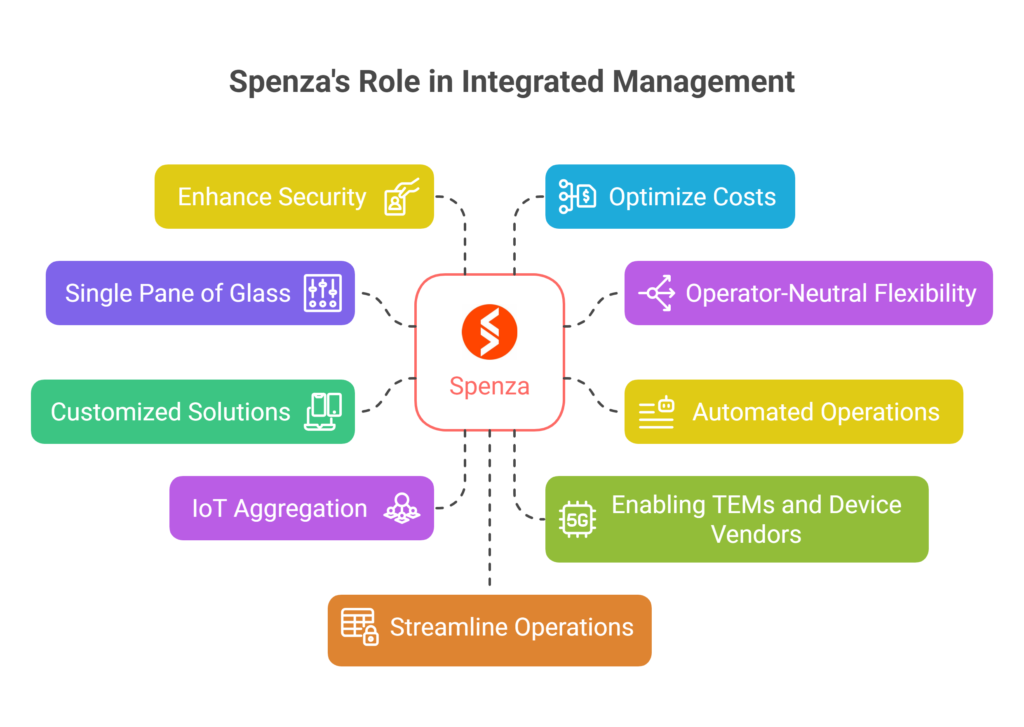
- Single Pane of Glass: Spenza offers a centralized platform to manage services and wireless spend across different operators and devices, providing unified visibility and control for better enterprise mobility management.
- Operator-Neutral Flexibility: Spenza’s marketplace includes mobile plans from various providers, allowing businesses to choose the best connectivity options without being tied to a single provider, ensuring flexible network management.
- Automated Operations: Spenza automates connectivity operations, like monitoring usage and adjusting plans mid-cycle, reducing manual work and costs, and supporting MDM/CMP integration goals.
- Customized Solutions: Spenza meets diverse connectivity needs, from IoT devices to high-bandwidth solutions, with multi-operator SIMs/eSIMs and configurable network preferences, adapting to specific MDM policies.
- IoT Aggregation: Spenza consolidates costs, inventory, and processes for enterprises using multiple IoT service providers, optimizing operations for millions of IoT subscriptions.
- Enabling TEMs and Device Vendors: Spenza helps TEM consultants and device vendors offer branded mobile plans and manage telecom expenses efficiently, providing white-label solutions.
- Enhance Security: Spenza ensures only authorized and optimally configured SIMs/eSIMs are active, providing data that can be correlated with MDM for security policy enforcement, such as detecting unusual data patterns.
- Optimize Costs: Spenza optimizes costs through intelligent plan adjustments, a marketplace for competitive rates, and a single bill for multi-operator environments, preventing overspending.
- Streamline Operations: Spenza streamlines operations by automating connectivity management and providing a single platform to manage diverse global connections, reducing the administrative burden.
By managing the “connect” and “control” layers of connectivity procurement and management, Spenza provides the essential foundation upon which MDM policies can be more effectively realized and enforced.
Conclusion
The message is clear: integrating Mobile Device Management (MDM) and Connectivity Management Platforms (CMP) is essential in today’s complex enterprise mobility landscape. Managing device security, application access, and network connectivity separately leads to inefficiencies, security risks, and higher costs.
An integrated approach, where MDM and CMP work together, enhances security, streamlines operations, optimizes costs, improves visibility, and ensures better compliance. This unified strategy is key to building a resilient, secure, and agile mobile infrastructure that meets the needs of the modern, distributed workforce. As businesses move towards Unified Endpoint Management (UEM), integrating connectivity management will become standard, making the adoption of these principles today crucial for future-proofing your enterprise mobility suite.
FAQs
Don’t let siloed systems hold your enterprise back. Discover how Spenza can streamline your operations.


