



The 2025 Fintech Crisis – When Growth Models Break
The secret is out: the numbers no longer work.
While venture capital once subsidized unsustainable Customer Acquisition Costs (CACs), today’s fintech’s must deliver real profitability. The industry’s average CAC has soared to $1,450 per customer, and for enterprise clients, it reaches a staggering $14,772—an increase of over 222% in eight years.
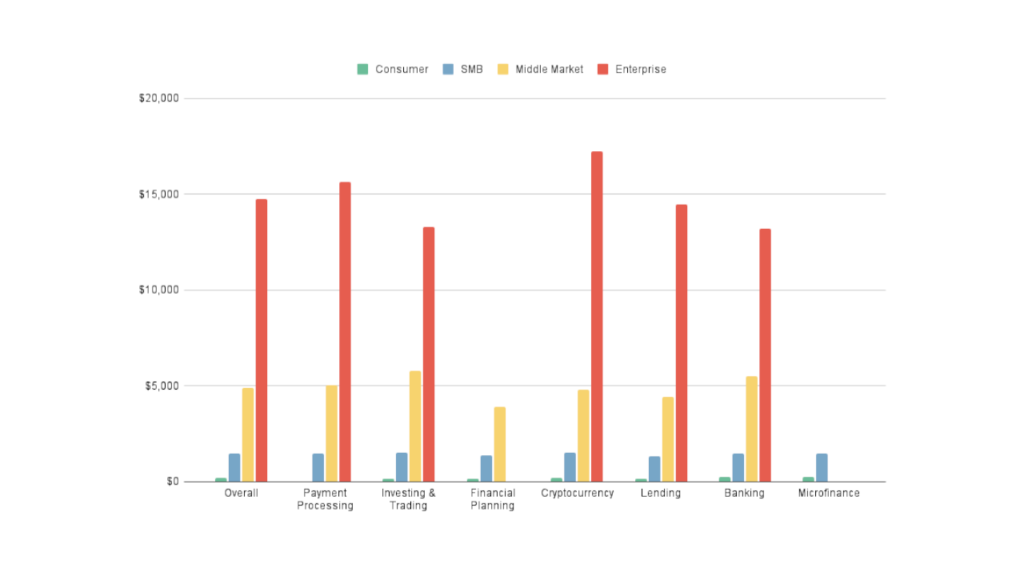
What’s Driving the CAC Surge?
- Escalating competition: Mobile ad spend is projected to hit $540B in 2025, making user acquisition a bidding war.
- Compliance burden: Every marketing asset faces legal scrutiny. With 60% of fintechs paying $250K+ in fines, the real cost of acquisition is far higher than it seems.
- Trust deficit: Unlike legacy banks or tech giants, fintechs must invest heavily in education, social proof, and longer funnels to gain user trust.
And Then Comes Churn:
- 87% of users churn within 24 hours
- 73% abandon the app within the first week
- Annual churn across B2B fintechs is a sky-high 26%
These metrics create a death spiral for unit economics. To maintain a 3:1 LTV:CAC ratio, a $1,450 CAC requires $4,350 in LTV. But due to retention issues, that surviving customer must generate over $9,200 in value to cover losses from the cohort—a nearly impossible task.
The Perfect Storm of Market Forces
The fintech downturn isn’t just about CAC—it’s about a collapsing environment:
- Investment is drying up: Global fintech funding in H1 2025 was just $44.7B—the lowest since 2020.
- Tech giants are encroaching: Apple, Google, and Amazon enter financial services with no trust deficit, zero CAC, and deep ecosystem advantage.
- Regulatory scrutiny is tightening: Mature fintechs spend 8–12% of revenue on compliance. Startups? Up to 20%. Innovation slows. Costs rise.
The old growth engine is dead, and without a new one, many fintechs will stall—or disappear.
Why Traditional Differentiation No Longer Works
The playbook that built the first generation of fintech unicorns is obsolete. Better UI, marginally higher savings rates, and rewards programs have become table stakes. Even embedded finance—once the frontier of innovation—has commoditized. As financial services integrate into every platform from e-commerce sites to ride-sharing apps, being embedded makes fintechs invisible infrastructure rather than differentiated brands.
The market has reached feature saturation. Customers can barely distinguish between the offerings of different neobanks, digital wallets, or BNPL providers. In this environment, incremental improvements deliver diminishing returns. The next phase of differentiation must be transformational, not iterative.
Beyond Embedded Finance: Becoming the Embedder
The strategic narrative for fintech must now flip.
The first wave of fintech innovation was about embedding financial services into other ecosystems—ride-hailing apps, e-commerce checkouts, and digital marketplaces. But that model has hit its limits. Differentiation fades, visibility drops, and value capture becomes fragmented.
The next chapter? Fintechs must become the platform, not the plugin.
And the most powerful service to embed—the one central to modern life—is mobile connectivity.
From Embedded to Embedder: The MVNO Advantage
With a Mobile Virtual Network Operator (MVNO) model, fintechs can offer branded mobile services—without building infrastructure or laying fiber. Here’s how it works:
An MVNO lets you offer your own branded phone plans by leasing network access wholesale. You control the bundle, pricing, and experience; your users activate eSIMs in a few taps right inside your app.
The strategic upside is clear: new subscription ARPU, stickier engagement, and better data for cross-sell and risk models. Industry figures point to ~$150/year incremental revenue per subscriber as a reasonable goalpost for planning—especially when sold to your existing base. This is the essence of the financial services MVNO.
The Strategic Case: 4 Transformational Pillars
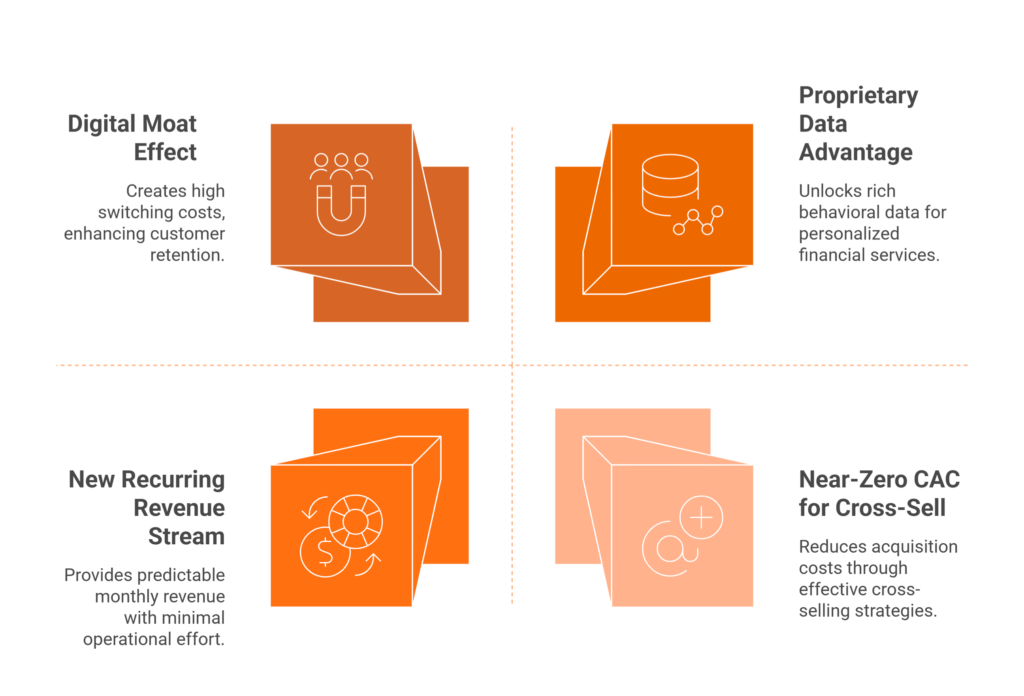
1. A New Recurring Revenue Stream: Mobile subscriptions deliver predictable, high-margin monthly revenue—untied to transaction volume. This aligns fintech economics with SaaS investor expectations, while diversifying income away from volatile interchange or trading fees.
2. The Digital Moat Effect: A phone plan is stickier than a bank account. The hassle of porting a number, coupled with daily mobile reliance, creates built-in switching costs. When leaving your fintech also means losing your mobile service, churn drops dramatically. This isn’t a distraction from your core product; it’s a powerful enhancement that makes your core financial service indispensable.
3. Proprietary Data Advantage: With proper consent and privacy safeguards, fintech mobile services unlock behavioral data far richer than financial transactions alone—location patterns, travel frequency, device usage. This fuels:
- Smarter fraud prevention
- Personalized offers
- Alternative credit scoring
4. Near-Zero CAC for Cross-Sell: Offering mobile plans to existing customers means no traditional acquisition cost. And bundling connectivity with financial activity (e.g., bonus data for saving or on-time payments) creates compelling incentives, improving blended CAC across your ecosystem.
The Business Impact—Quantified
The financial upside is clear and compelling.
Revenue Impact Industry benchmarks show that mobile subscriptions can drive $150+ in new annual revenue per user. Even modest adoption can be transformational. For a fintech with 100,000 users, just 20% adoption equals $3M in new annual recurring revenue.
Retention Impact Mobile services shift user behavior from occasional interactions to daily engagement. Instead of opening a banking app a few times per month, users engage daily—checking usage, topping up data, receiving alerts. This creates the ultimate banking super app.
This continuous brand exposure builds habits. Habits build retention. Retention builds LTV. Over time, these interconnected data signals become a competitive moat—impossible to replicate by pure fintechs or pure telcos.
How Klarna and Revolut Are Redefining the Fintech Ecosystem
The strategic imperative to embed mobile connectivity is not a future-facing theory; it is a competitive reality being executed by the world’s most innovative fintechs. The decisive moves by Klarna, Nubank, and Revolut into the MVNO space provide definitive market validation for leveraging mobile to build a more defensible and profitable ecosystem.
Case Study: Klarna (US Market): Facing intense regulatory scrutiny in its core BNPL business, Klarna has strategically diversified by launching an MVNO for fintech in the United States. The service is a pivotal step in its ambition to evolve into a full-fledged neobank, leveraging its massive user base for a highly efficient cross-sell motion. Klarna’s solution directly addresses customer pain points with a transparent, no-contract offering featuring instant eSIM activation within the Klarna app.
Case Study: Revolut (UK/EU Market): Building on the success of its global eSIM product, Revolut is expanding to full-fledged mobile plans. With over 50 million global users, Revolut is weaving its mobile service directly into its lifestyle and loyalty framework, allowing customers to pay for subscriptions using loyalty points. This masterfully transforms the mobile plan into another rewards feature, reinforcing daily engagement and solidifying its position as an all-in-one financial super app.
Tangible Use Cases to Drive LTV and Engagement
The true power of an MVNO strategy lies in its capacity to function as a versatile “feature platform“—a toolkit of connectivity-based incentives woven throughout your product stack.

- Use Case 1: Neobanks – The Ultimate Lifestyle Bundle
- Concept: Include a branded mobile plan in premium subscription tiers.
- Business Impact: Dramatically increases the perceived value of premium accounts, justifying higher fees and creating an incredibly sticky relationship.
- Use Case 2: BNPL – Gamifying On-Time Payments
- Concept: Reward on-time payments with mobile data packs.
- Business Impact: Gamifies financial responsibility, directly reduces default rates, and lowers collection costs.
- Use Case 3: Digital Wallets – The Seamless Top-Up
- Concept: Integrate mobile plan management and top-ups directly into the wallet.
- Business Impact: Creates a new, high-frequency use case for the wallet balance, increasing transaction velocity and solidifying the wallet as a central spending hub.
- Use Case 4: Cross-Border Fintechs – The Global Companion
- Concept: Offer competitively priced global roaming eSIMs and data packages.
- Business Impact: Solves a major pain point for a lucrative customer segment, establishing an indispensable relationship from day one.
- Use Case 5: WealthTech Platforms – The Secure Connection
- Concept: Bundle a mobile plan designed for traders with features like a secure, private network connection and zero-rated data for market streams.
- Business Impact: Appeals directly to high-net-worth individuals who place a premium on security and reliability.
Making It Reality – The Technology Enablement
The traditional path to launching an MVNO involved 12-18 month timelines and multi-million dollar investments. Today, that model is obsolete.
Mobile Virtual Network Enabler (MVNE) platforms like Spenza provide the complete “MVNO-in-a-Box” backbone, transforming high-CapEx infrastructure projects into low-OpEx software implementations. The game-changer is eSIM technology, which transforms connectivity into a purely digital product provisioned instantly inside your app.
Spenza: The “MVNO-in-a-Box” for Fintech
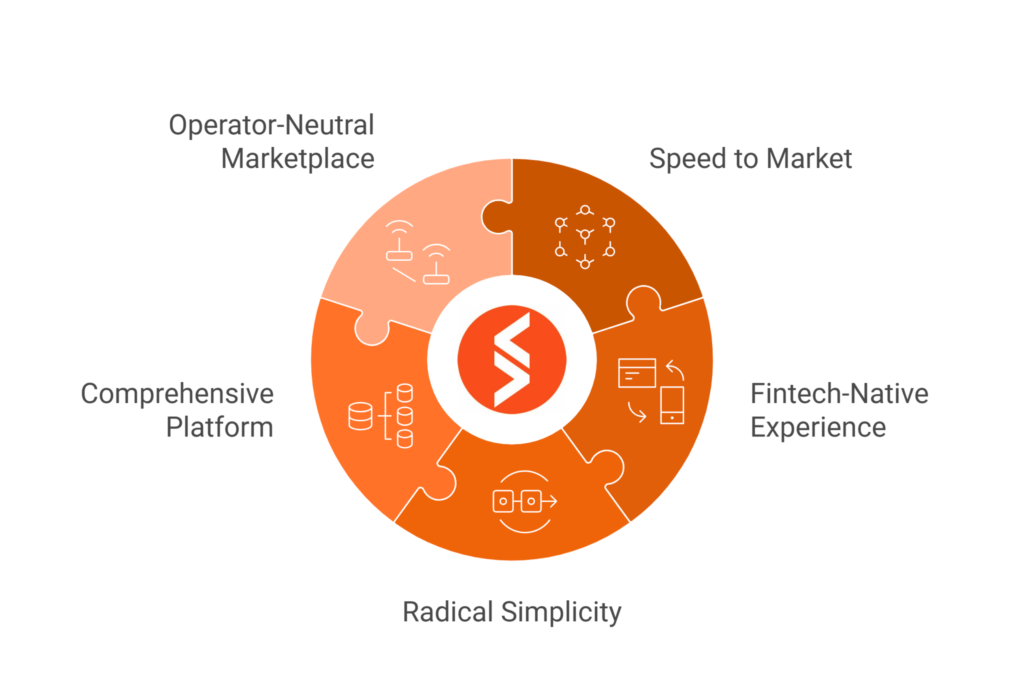
Spenza is the modern MVNE platform built on four key pillars:
- Unprecedented Speed to Market: Launch a branded mobile service in as little as seven days.
- A Fintech-Native Experience: Pre-built, white-label eSIM provisioning flows for a seamless, in-app user experience.
- Radical Simplicity: Manage a mobile offering without hiring a dedicated team of telecom experts via plug-and-play APIs and SDKs.
- An End-to-End Comprehensive Platform: A single dashboard to manage subscribers, automate billing, optimize costs, and handle integrated compliance.
Spenza’s operator-neutral marketplace gives you instant access to a portfolio of connectivity plans, ensuring you can always offer the best service without being locked into a single MNO contract.
Are You Ready? A Fintech MVNO Readiness Checklist
- Audience fit: ≥25% of users travel frequently, skew prepaid/family plans, or value roaming.
- Attach hypothesis: Clear incentive (rewards, travel data, family plan sharing, zero-rating your app).
- Unit economics: Model +$6–$10 monthly ARPU uplift and ≥25% churn reduction for pilot cohorts.
- Geo/roaming scope: Start with 1–2 core markets; validate roaming early.
- Support readiness: Number porting rules, fair usage, refunds, Tier-1 support routing.
- When not to launch (yet): If attach is unclear, or support capacity is months away—pilot a limited geo/feature first.
Conclusion: The Time to Act is Now
The convergence of financial services and mobile connectivity isn’t a future possibility—it’s today’s competitive reality. Klarna, Nubank, and Revolut have validated the model. The technology barriers have fallen. The business case is proven. The path away from a $1,450 CAC and 26% annual churn doesn’t lie in incremental tweaks—it lies in a transformational new connection with your customer.
For fintech leaders, the question isn’t whether to launch a mobile service, but how quickly you can execute. The companies that move decisively now will own the next decade of fintech innovation.
Mobile connectivity is more than the next big feature—it’s the foundation for the next generation of fintech super apps. The technology is ready. The market is ready. The only question remaining is: are you ready to lead this transformation?
FAQs
Ready to explore your attach rate and LTV uplift? Book a free demo with Spenza to see how a branded mobile service can fit your roadmap and market.


